Hanoi and Dien Bhien – scooters & cement

August 7, 2017
Hanoi's Old Quarter

Hanoi’s Old Quarter

7 million people live in Hanoi and 5 million scooters ferry them about. It’s a city of marvels in many ways but the scooters block that out.

Scooter owners, of course, resist possible restrictions even while they wear facemasks to get around . Hanoi has moved factories out of the city but scooters besmirch the air. Walk around indoor market stalls and scooters push around you – like I say, no-one walks. They squeeze their scooters through the streets of the old quarter, sometimes a baby on the handlebars and a child standing between the parent’s legs.

Traffic is banned banned from Hoan Kiem Lake from 7pm Friday through the weekend, allowing a haven in the middle of the old quarter. That temporary banning suggests some will is there to have a breathable city.

Hoan Kiem Lake

Hoan Kiem Lake

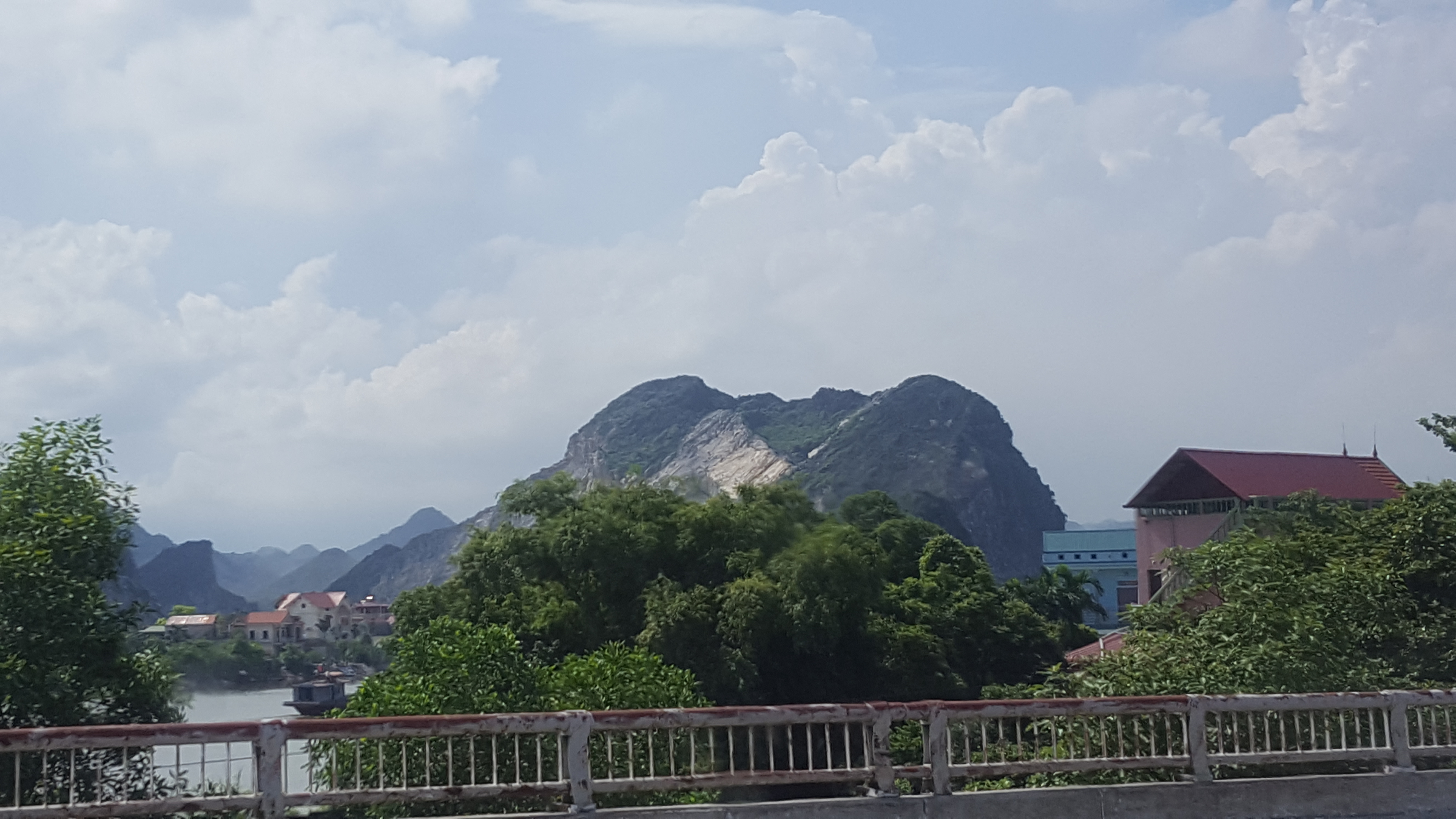
dhien bienWe travelled south, for a sampan journey along the quiet Ninh Coc River. The river winds through the bulbous hillsides of Karst, limestone upheavals from seabeds of millions of years ago. Running south from Hanoi, the Truong Yen Mountains form a vivid jagged line over to the west. The limestone range runs for 300km. Almost all of it, it seemed, is being actively quarried up to its summits. It’s painful to witness. Cement factories are even squeezed next to great hill forms on the edge of heritage areas.
a quarried hill

a quarried hill

This Province of Bhien Dien is wealthy on the back of tourism and cement. It will lose both if it hacks down its mountains. Cement’s days will end and the beauty will go with the mountains and hills.

Larkin as Vampire

July 29, 2017


Larkin's NoteA little card from 1954 sits in a glass case in Hull’s university library, in an exhibition that seeks to contain his life. Philip Larkin had just been interviewed for the librarian’s post. He’s not enthused. ‘Arrived safely after very dull journey,’ he wrote. ‘Hull has its Christmas decorations up, for what that’s worth … wd that I were safely rolling away. All that remains is this 41/2 hours in between. It’s a bit chilly here and smells of fish.’

He got the job. And kept it till he died some thirty years later. Hull has that reputation; once it gets you, it keeps you. I took a train for my interview at the university in 2009. I was excited. It gave me a chance to visit the Ferens Gallery with its top collection of mid 20th century British Art. I didn’t expect much else from the day. Then Hull reeled me in.

I found a home a short walk from campus – in Philip Larkin Close. My job as a writing professor includes being Director of the Philip Larkin Centre for Poetry and Creative Writing.  My first event saw Faber’s new young poets arrive for a reading; simple enough. Then came the Q&A. Faber once published a Collected Edition of Larkin’s poetry and excluded a special poem. The hall erupted with accusations.

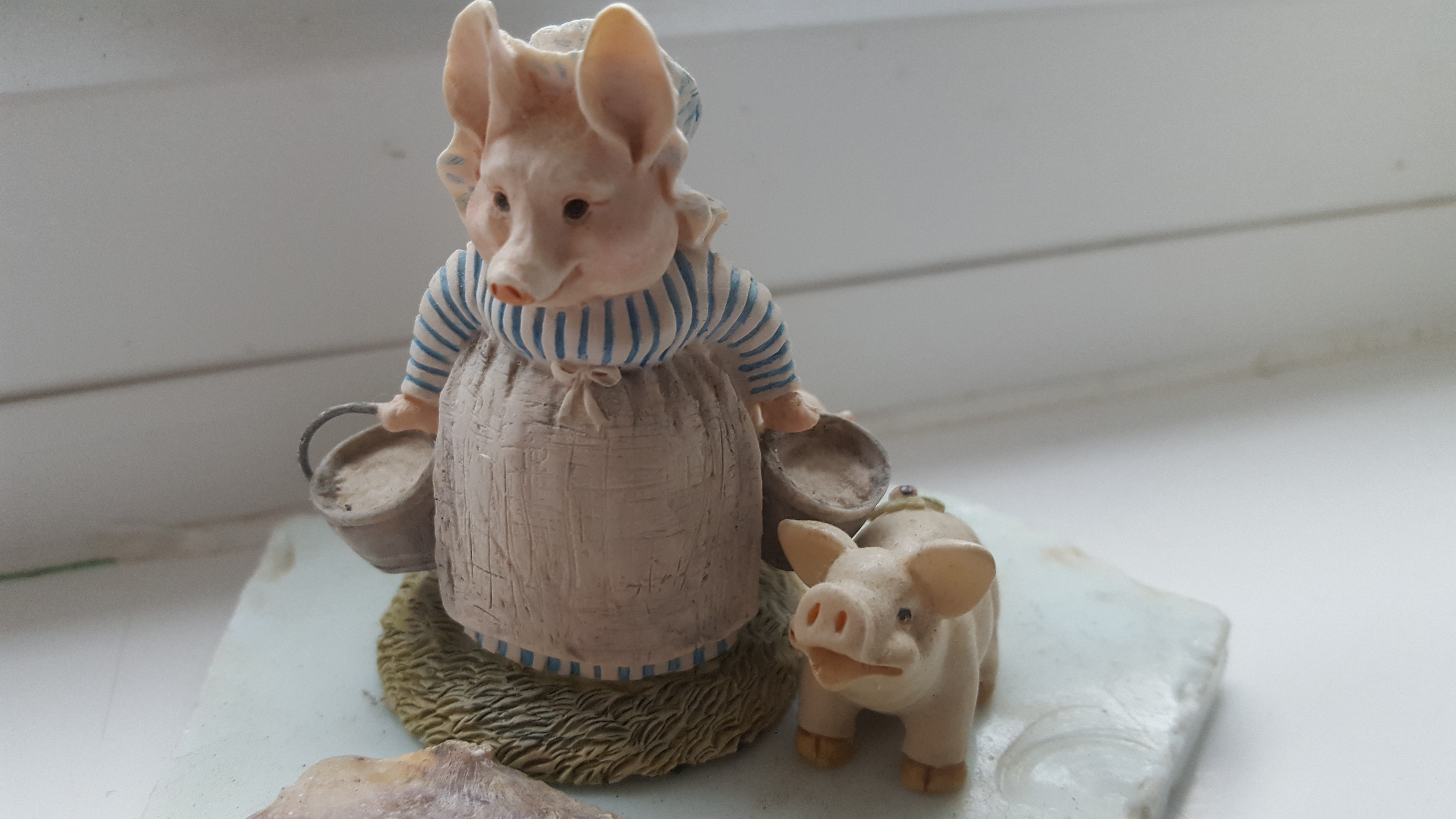
Larkin's Beatrix Potter figurines

Larkin’s Beatrix Potter figurines

20170729_175617

My Beatrix Potter figurine

The current exhibition is an affectionate one – here’s the man’s Beatrix Potter figurines; here his school case; here the sleeves of his jazz record collection; here pyjamas and his annotated letter to pyjama suppliers (6’ 1”). In the city, the Larkin name remains a bombshell. He’s everything worth fighting for, or everything you stand against.

I’m in neither camp. The novels don’t pull it off for me while the poetry contains some narrative jewels. The finest poems are the ones Larkin judged to be so and put in his collections. ‘I’ll come to Hull,’ Julian Barnes answered to my invitation, ‘so long as I am taken to Philip Larkin’s grave while I am there.’ That, for me, is a sound approach. Larkin’s grave is marked by a white stone in the cemetery at Cottingham, a large village that borders Hull and relaxes into the countryside of the Wolds. Black stick-on letters give his name and the one word: WRITER.  Like his poems, it compresses a lot into very little.

It might have said POET. ‘Larkin was unusual,’ James Booth, his recent biographer, explained to me. ‘For him the novel was the top literary form, not poetry.’ For me, Larkin’s choice of word for his grave says more than that: WRITER is stating your condition.

Julian Barnes displayed every sign of the condition. In Hull’s History Centre we brought out Larkin’s lawnmower to show him (it’s high on the wall of the current exhibition). He bent down, curiously intent. He had found a label, with fuel advice for the two stroke engine, and needed to gather in every word of it. My predecessor at Hull, the poet Christopher Reid, was known for pausing by every poster in the corridor, no matter how often he passed it, to collect its text. Words anchor a writer.

The entrance to Larkin’s exhibition winds you through shelves of his books, orange spines of Penguins thick among them. Beyond them I sat with headphones and listened to Larkin interview his mother, Eva. ‘Why were you reading Wuthering Heights?’ he asks with a snap of true interest. She speaks in a West Midlands accent familiar from my father’s family, and has her own careful way with words. When her husband-to-be Sydney sidles alongside her for the first time, she finds it ‘alarming’. Fear contained in simple language, it’s the essence of much of Larkin.

I think of Larkin and I think of myself too. I spoke with Andrew Motion on his recent visit. He taught at the university for two years and befriended Larkin. What was good were the old streets of the city centre and the chance to explore the East Yorkshire Wolds. He felt warmly toward the folk of Hull. The university of those days though was rather stuck in its ways and didn’t know how to make him welcome.

Larkin had the eyrie of his library office. He lined the porters up for their morning inspections. He walked home for lunch and then back again, often hurling abuse at students who got in his way. All the while, he turned words and memories in his head. He found somewhere to be but nowhere to belong. It’s hard to write from inside of things. Writers have an easier place on the outside, looking in.

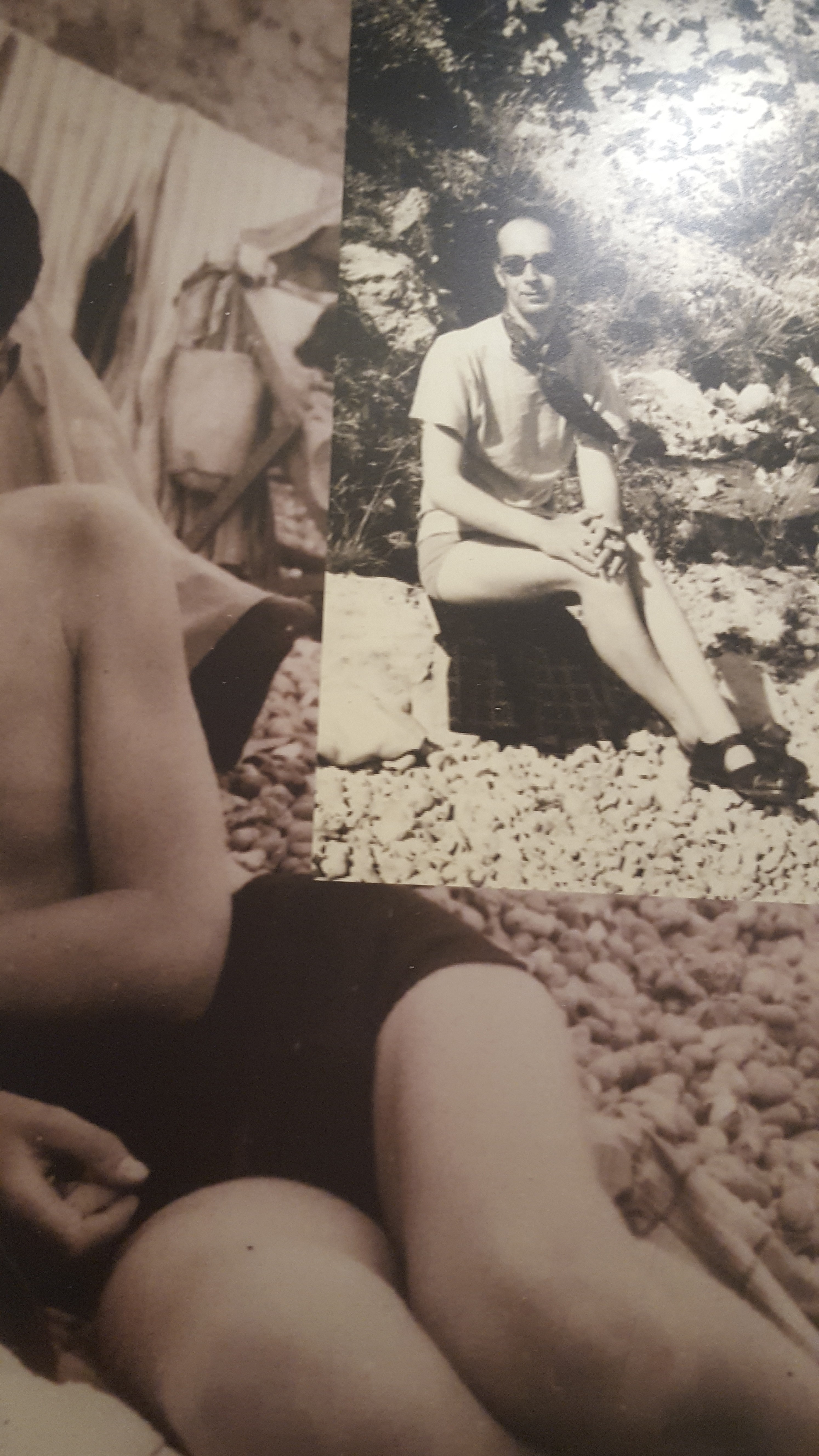
Philip LarkinAnd yet Larkin, I’m sure, felt lonely. A photo in the exhibition sees the young yet already balding Larkin seated on a rock. He wears sunglasses, a kerchief tied loose around his neck, the skimpiest of trunks, his fingers entwined on his bare knee, his legs crossed at the ankles. The pose is incredibly fey and unprotected. As an undergraduate at Oxford it’s understood he dabbled in homosexuality. By the time he was writing novellas of lesbian frolics under the pseudonym of Brunette Coleman he was, James Booth has written, ‘out of his homosexual phase’. Andrew Motion has written that those homosexual feelings ‘evaporated’. The exhibition includes the spines of diaries whose contents Larkin asked to be destroyed after his death. His secretary Betty Mackereth couldn’t but help but glimpse the occasional page as she shredded them. ‘They were very unhappy,’ she said. ‘Desperate, really.’

‘With hindsight,’ Alan Bennett has written, with Larkin’s treatment of those women he took to bed in mind, ‘he would have been wiser to persist with the messy homosexual fumbling.’

People speculate about what was written in those diary pages. I have my own guesses born of my on life. You look to destroy what society and some you care for will likely find shameful about you. Larkin abandoned his dreams of being a novelist in the wake of his friend Kingsley Amis’s riproaring success with Lucky Jim. The surrender grieved him, for James Booth was right. ‘Novels seem to be richer, broader, deeper,’ Larkin told The Paris Review in 1982, ‘more enjoyable than poems.’ Perhaps homosexuality was like being a novelist. He had a go, didn’t do very well at it, saw others doing better, so switched track. Homosexuality is not a phase and feelings don’t evaporate. It doesn’t work that way. John Banville noted that the hardcore pornography found in the file drawer in Larkin’s office and under his bed included some ‘meant for a homosexual readership’.

Larkin’s playful ‘Annus Mirabilis’ was 1963, ‘when sexual intercourse began’ but ‘a little late for me’. In 1967 gay sex was decriminalized for adults 21+ in private – even later for Larkin. He joined Hull University in 1955 – the decade had no room for gender fluidity. Students experimented while he did the best he could and grew older. One of the small cards of his sayings inside the exhibition reads ‘I don’t want to go around pretending to be me’. I’m told that after introducing a poet at the university, he took his place in the audience, reached up to his ear, and turned off his hearing aid. He didn’t want to play the poet. It was more honest to be his own private mess of a man.

On the backstreets of Hull in Larkin’s day no one knew the Larkin name. They weren’t a poetry crowd. Some university folk might cruise down from the campus for a spot of cottaging but they didn’t really stop for a chat. You did what you did, you got what you wanted if the pickings were good, and on you went. Even 1967 didn’t make street sex safe. Larkin was a tall and balding man in a raincoat and thick dark glasses, that’s all they knew. He was around now and again. Then he got a bit famous and his photo appeared in the papers. Men recognised him then alright. That’s a story I hear in Hull, one that stays close to the streets.

It’s odd, being a writer at the university. Writers aren’t a smooth fit inside the fabric of the place. For writers in the town, the university job places you at a curious remove. Years ago I said to my agent, ‘You know, I can’t do three things at once. I can’t have a job, have a social life, and write.’ The truth hit me as I spoke it. I moved to a fresh part of the country, left friends behind, took on a new job, and kept on writing. Eight years ago I moved to Hull. The process continues. You can’t write and have everything else. It’s a choice and it’s no choice. You have to write.

For the last ten years of his life Larkin’s writing pretty much dried up so he didn’t have even that. Poetizing was ‘pretending to be me’. Another me, a true me, had no open expression. Larkin was good at saying what that ‘true me’ wasn’t but could he have said what it was? Some of it was hidden with the pornography, and compressed into diariies.

27th July 2017, Hull’s Year of Culture and the 50th anniversary of the Sexual Offences Act. Hull Pride had been partying for a week.The South Bank’s Literary Salon Polari came north for the night.

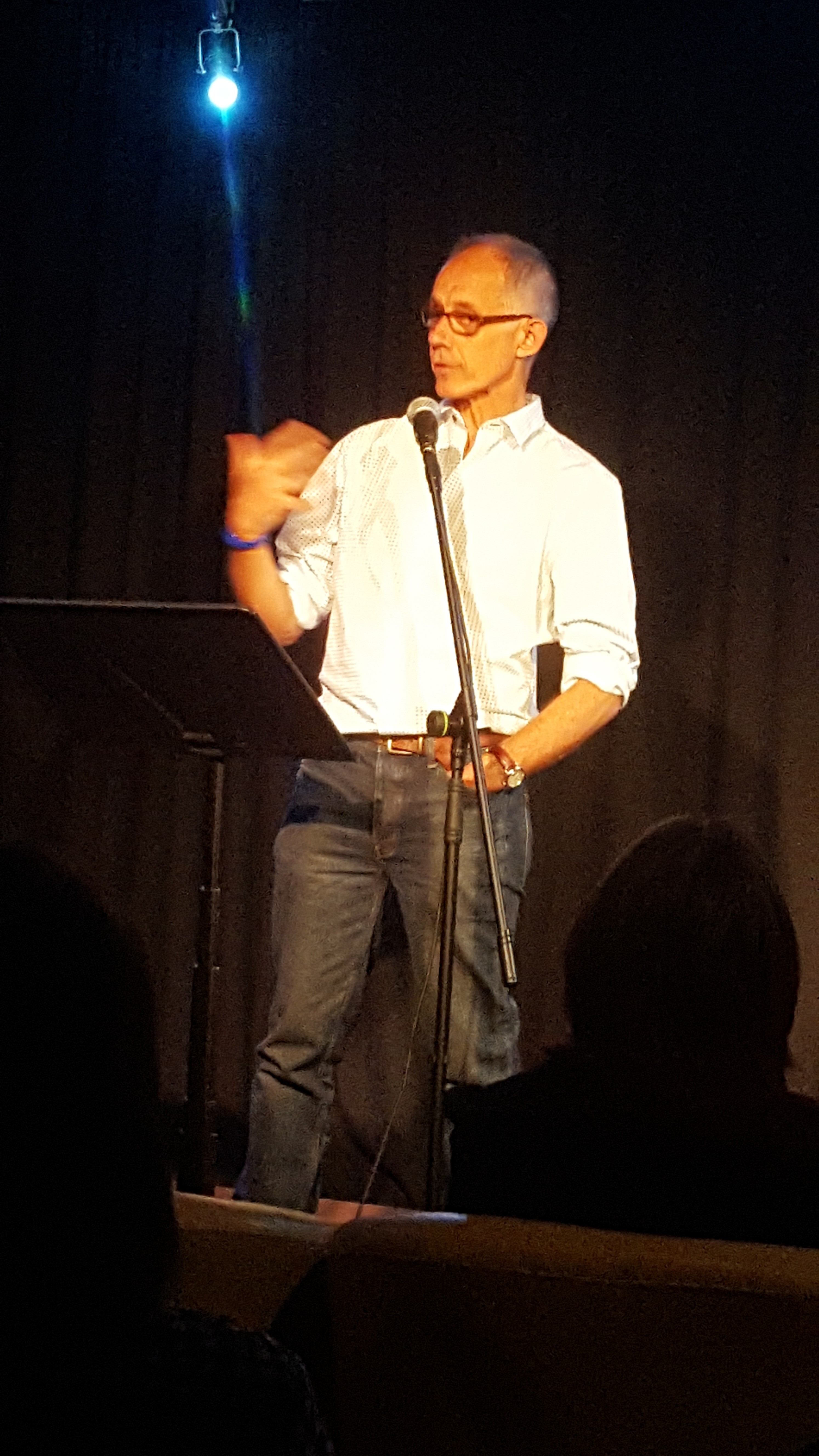
I allowed myself out for the evening. It was a cheerily full house. My party-piece was a reading onstage Alexis Gregory Sarah Walton Martin Goodman Larkinfrom my upcoming gay Hull outsider novel Forever Konrad: A Vampire’s Vampire. Larkin was in the building, an outrageous portrait made of spangles and buttons in a gallery of iconic figures that festooned the walls. Beyond the lights the audience were dark outlines of themselves so I could imagine Larkin out in the crowd too. A silk scarf was wrapped around his neck, his feet were crossed at the ankles, his fingers aflutter.

First up is Dean Wilson , then  Sarah Walton, and then it’s me. I read from the heart. My character Konrad’s heart. He speaks of his love for an Ancient, an Ur-species of vampire, and the night he allowed himself to be taken. And thMartin Goodman July 2017ere it is: I sense a keen pinprick of interest from way over at the back. ‘Books are a load of crap,’ Larkin once confessed. What was in its place? ‘Evil was just my lark: / Me and my coat and fangs / Had ripping times in the dark.’ Vampirism and cottaging all get kind of messed up in that curious poetic conceit.

Larkin had slipped away when the lights came back on. Good fun’s best in small doses. I smiled at people, sipped my bottle of Scarborough-brewed gluten free ale, and followed him home.


Colm Tóibín HOUSE OF NAMES

April 22, 2017

Throw out what you thought you knew of the House of Agamemnon & start here. Has Colm Tóibín been reading George R.R. Martin or sat in front of Game of Thrones? That seems as stronHOUSE OF NAMESg an influence as the Ancient Greek sources. House of Names is a tale of a king and army in thrall to Gods, bitter revenge in the throne room, young pretenders thrust into cruel exile. The language is wilfully simple … run it through some program and it might reveal this to be a young adult novel. And indeed, for a mighty portion of the book, it is.

Clytemenestra’s is the opening voice. Her daughter Iphigenia is pledged as sacrifice to the Gods so they will send winds to speed Agamemnon’s troops on their way. Why should a mother believe in Gods who would condemn her to such sorrow? She vows to be her own authority henceforth, with revenge and power as her driving forces.

Her other daughter Electra will join in on the revenge route. Both women get first person narratives of their own. Orestes has to make do with a third person narrative from his point of view. That’s symptomatic of his whole Orestes_&_Pyladesexistence – Clytemenestra ships this son into exile for his ‘safety’ – but the gayness he barely acknowledges to himself sees him surrender any voice within his household. His love for young Leander (an apparently fictional creation that links to the takes of Orestes and Pylades from the myth) is fostered in rural exile and finds silent expression in the night. How old is this Orestes? He is playing at swords with soldiers as a child when his father was alive, and five years later returns as a man. Sex, both hetero and gay, is a force in the book but one that is not comprehended and so not detailed. This is the YA aspect of the book – Orestes’ is a gay teenage love story set inside one of the most fearsome family adventures from classical literature. I found it a strong and ultimately touching read.


When other people’s stories can save the world

March 7, 2017

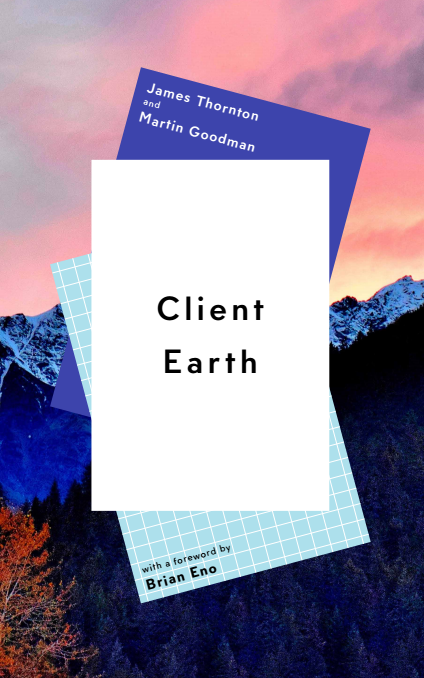
I write in various forms. The challenge interests me. Client Earth, out in May, had its challenge set by the McIntosh Foundation of Washington DC. They offered funding to buy me out of some university teaching, if I would write a maScreen Shot 2017-03-07 at 11.16.10instream book about the work of public interest environmental lawyers in Europe.

I took ‘mainstream’ as ‘pacy read for bright people’, a book they would buy as a break from a novel. It seemed an impossible ask. Still, I had been saying that writers should step from their comfort zones and into the likes of science. Here was a chance to walk the talk.

I presumed I would be shadowing lawyers. It turned out that most lawyers don’t have shadows because they like to live in them. That obstacle, a real bruiser when I first encountered it, turned out to be a boon. It meant working with those few lawyers who are alert to the power of story, and then broadening the sweep to include philanthropists and activists.

I crop up in the book as an occasional character, but my main role is to head out and meet new people in fresh places. Then readers encounter these situations for themselves. I presume a shared starting point for both readers and myself – intellectually inquisitive but curious. We will learn all we need along the way.

Client Earth’s tone is buoyant. That’s unusual for a book that faces ecological collapse. It came about because I met people with the determination and skillsets to address problems which are so huge and complex I thought they were hopeless. That is of course what good lawyers do; they wade in on our behalf in our moments of despair.

Artfully, I’ve roped in a lawyer to interleave my narrative with expertise. As CEO of ClientEarth, James Thornton has migrated the concept of bands of ecolawyers out of its starting point in the USA, and set it in place across Europe with outreach in Africa and China. His sections of lucid commentary follow each of my chapters.

Will the book find its readers? Agent Patrick Walsh took it on as a cause, and Philip Gwyn Jones decided it to champion it at Scribe. As a writer, I’ve long known how an occasional author gets the chance to pitch their new title to a publishing sales team. It’s what top writers do. That’s not my role, I’m no James Patterson, but in January there we were, James and myself, sharing Client Earth with the folk at Faber who head out and spread the word to booksellers. And then those booksellers can present the book to you.

IMG_5936

Billingsgate market early one morning, as I start to learn how lawyers work to save fisheries

I’ve written the narrative but it’s not my story. I’ve simply told it. The story itself belongs to James Thornton and the brazen activists who use law to save the planet. ‘The publication of this book couldn’t be more timely,’ Caroline Lucas has written. This book is an inspiration for those of us trying to build a sustainable future – and I’d recommend it to anyone who wants to know how and why we must deploy and enforce the law in the fight against ecological destruction.’  I’m chuffed to have had a hand in a book that can do that.

After five years of writing Client Earth I expected to lock myself back in fiction for a while. It’s seductive though, this sense that a nonfiction book can help put a world to rights. Life seems somewhat purposeless without such a challenge. The planet’s still in peril. And people are venturing out to apply a fix as best they can. Those are powerful stories to tell. Already I sense one out there, calling, and calling strong.

The genius loci – when place generates writing ideas

January 24, 2017

E.M. Forster was walking in sunshine in the country outside of Rapello. The distant town was bright against a dark blue sea, and a breeze stirred leaves on the slender trees around him. And then it hit. A story came through in barebone completeness. ‘I would bring some middle-class Britishers to picnic in this remote spot,’ he recalled. ‘I would expose their vulgarity, I would cause them to be terribly frightened they knew not why, and I would make it clear by subsequent event that they encountered and offended the Great God Pan.”

He was twenty-three. His short story, ‘The Story of a Panic’, streamed out as he cloistered himself in his hotel room for two days. The tale of an errant boy brought to wildness by meeting Pan, expressing his love for a waiter, felt so dangerous (revealing repressed gayness) that Forster kept it back from publication for years.

Never before, and only once since, had a story come to him in such a storm of revelation. He called the process the ‘genius loci’, where some interaction with a wild place sweeps the whole skeleton of a story inside you and you’re left to flesh it out. It involved ‘sitting down on a theme as though it is an anthill.’

I’m sure this happens to others and would like to hear of it. It has happened once to me.

It was the summer of 1997. A road through a valley was the entrance wTetonsay to the Grand Tetons National Park: bald eagles stood in the grass along the riverbank and scanned the passing water. The Tetons are part of that race of mountains that master the sky. We hiked forest trails, and plucked wild strawberries dense with taste.

The campsite was tense on our return: rangers were tracking a rogue grizzly bear that had menaced campers. For all that, I felt calm. A stump of a tree flanked our tent. I followed an impulse to stand on it. The time was brief – my partner had wandered off to the bathroom, and it was all over by his return – yet it was also timeless. Light fell around my like snowflakes, while the characters and the fundamental theme of this book rained into my head.

That was the summer of 1998. The theme has kept me at work ever since. You don’t choose to write a story such as this. It chooses you. Light fell around me like snowflakes and the whole novel, and the themes and characters and conflicts of a novel settled into my mind.

The novel’s bare bones were as such: A famed Jewish cellist-cum-composer from Vienna was challenged in his Big Sur home by his erstwhile biographer. She was an Australian music scholar, driven by their joint backstory: her grandfather was the Adjutant at Dachau, and the composer had spoken on his behalf at his war trial. The music of J.S.Bach was central to the story.

The largest surprise? That a young woman would be angered by someone’s defence of her grandfather. It fit with a major theme of my writing; the way the effects of war are passed down between generations.

Still, I wanted nothing to do with this story. The Holocaust was too immense to take on. All I had wanted was walks in the mountain air. This idea would consume my life.

And of course it has. Mountains, the ‘genius loci’, have helped along the way. I have spent months in our home in the French Pyrenees as strands of the novel developed and intertwined. I travelled to Dachau, and sat on the train tracks at Auschwitz for a week’s retreat in the company of Peter Matthiessen, who was researching his own Holocaust novel. I conducted interviews, tracked down archives, and read volumes as though this were a major nonfiction project. The facts of history dictated the book, and took it to Buchenwald, Theresienstadt, Toronto and Auschwitz.

These have been twenty full-on years. It’s set for the world now – editors have Follow the Dog as their January reading. Hopefully 2018 completes the book’s journey from that tree stump in the Grand Tetons and into reader’s imaginations and lives.


Killing & Remembering in Clapton

September 22, 2016

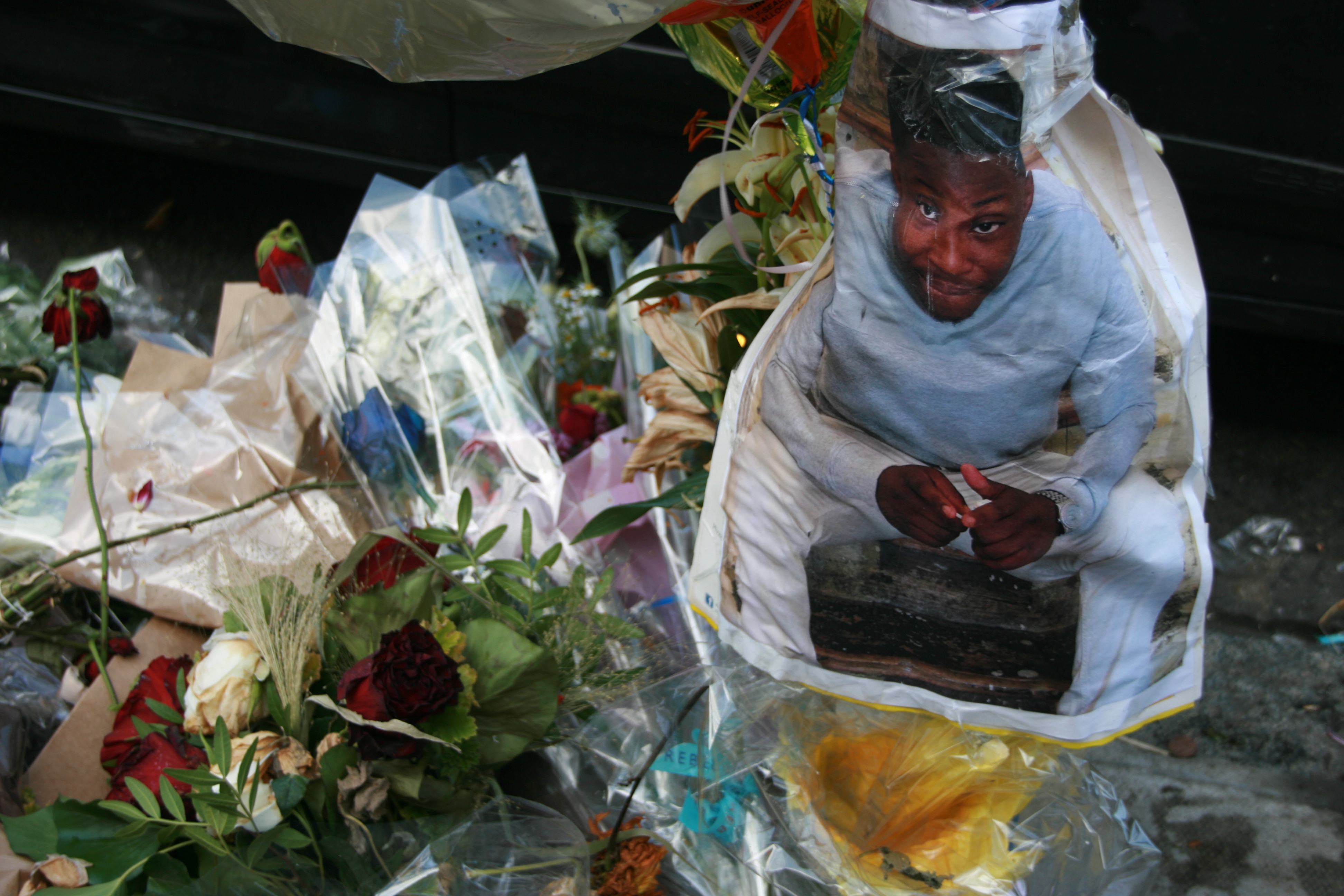
moses-shrineThe news bulletin told of a man killed on a Hackney street, among shoppers on a Saturday afternoon. I placed it elsewhere in the borough. My part’s been gentrified: Chatsworth Road has its Sunday market, its bistros, its delicatessens.

I was wrong.

Moses Fadairo was walking Chatsworth Road at 1.15 on Saturday 26th September 2015. Three men approached and shot him in the chest. He staggered into my local butcher’s and then on for fifty metres down the street where he died.

On the Monday the butcher was outside his shop. ‘The ambulance came but the boy was dead,’ he told a customer.

It’s hard to process such things. The next Saturday afternoon I walked the street and noted how quiet it was. Around the corner flowers climbed six feet up a lamppost, where balloons were tied beside a picture of Moses. He was a 27 year-old father of new twins. Candles flickered as part of the lamppost shrine. Among metres of bouquets, three teddy bears carried red hearts.

Friends and family gathered around the lamppost the night after his shooting. ‘We will still speak to him every day,’ his sister said. ‘He knows what is in our hearts as he can see us. He was a lovely boy. He didn’t deserve this.’

Two weeks on, dead bouquets were bundled into bins and some fresh ones tied in their place.


This is the last of a ‘Missing Bodies’ series you will find on this site: ten photos & short essays on ways of grieving, conceived as part of the Crossing Over research network.  Find links to the other nine below.

The Theresienstadt Family Camp

Highgate Cemetery & Douglas Adams

My father’s grave, Rempstone

On my mother’s grave

The Zen master

Death on the River Lee

Philip Larkin’s grave

Darwin’s seedlings

Sitka, Alaska


Helen Garner: This House of Grief

September 20, 2016

Years ago an agent tried to convince me to write to write a true-crime book about German cannibals. She felt she could get me a deal. I declined. I didn’t want to dip my life in that particular pot for several years.

Still, I admire those who do. In a profile piece yesterday, I was asked which book I would like to have written and why. I chose Truman Capote’s In Cold Blood. Classic breadth, great detail, so much life as well as death, all gently seething with Capote’s passion for his subject. The book made him as a writer, and simultaneously finished him off, it was so taxing. (Hence why I might like to have written it, to spare Capote, keep him writing longer.)

Kate Atkinson suggests Helen Garner’s House of Grief is like In Cold Blood. Maybe, but I first thought to link it more to Blake Morrison’s As If, his personal take on the trials of the kids who killed Jamie Bulger; or maybe Gitta Sereny’s Cries Unheard, about the child killer Mary Bell.

It’s different to those, though. Yes, Helen Garner filters her emotional responses into the story, as she watches the trials and appeals of a man accused of driving his three sons to death by drowning. She is in her sixties, a mother, a grandmother. The deaths and the lives they touch make a heart-rending story. But Garner does not milk it. She does not dramatize the young lives lost, or set out on her own investigative trail. The book is dedicated “to the Victorian Supreme Court: ‘this treasury of pain, this house of power and grief'” (referring to the court in Melbourne, Australia). That’s what she has given us: the full power of a trial, the court as a ‘house of grief’, filled with lawyers and journalists and families and accused and judges and experts and witnesses. Jonathan Harr’s A Civil Action is superb at following one lawyer through a case, but I know no other book with so broad and sympathetic a focus on the whole panorama of a trial.

Fresh from writing Client Earth, my own recent book on lawyers, I was especially struck by these lines: ‘I was overwhelmed by a sense that vast quantities of the evidence in this case were beside the point. Mighty barrages of fanatical detail had gone rushing and chattering past like a river after heavy rain.’

Mighty writing, and it’s a strong move, to sit with your observations and come out with such a personal statement. That’s how I have come to see these court cases too: filled, stuffed with material, which top lawyers shift aside as they bring focus to the points that really matter.

I admire that Helen Garner chose the subject, sat through the trials, and then worked and worked away at her material for years. It’s a taxing job, and helps us see our world more clearly, as we humans struggle to contain the sorrows that we cause.

The Theresienstadt Family Camp: Auschwitz-Birkenau

September 19, 2016

Follow the rail tracks inside Auschwitz-Birkenau but don’t go far. Those tracks lead an agonizingly long distance to one of the crematoria, but just to the right of the entrance is a large wasteland, sealed off from others by its own barbed wire fencing. Some chimneys stand in rows, surrounded by foundations of the prison huts that once made up this encampment. This was the Theresienstadt Family Camp. Its inmates came from the Czech camp of Theresienstadt, also known as Terezin, where they put on showcase productions of a children’s opera for visiting dignitaries and the Red Cross. (Find the stories in my novel J SS Bach.)theresienstadt-shrine

Elsewhere in Auschwitz, inmates were separated into gender, heads shaved and clothes replaced by striped uniform. In the family camp this was not so. Inmates were ready for show if Red Cross inspectors arrived. They were still destined for the gas chambers. Auschwitz was not a place of salvation.

Access is not allowed to the ruined family camp, but you can squeeze through the fence and no one is there to shoot you. Someone rendered this shrine within a brick oven. It’s a ragged affair. Most of those who might mourn most grievously were also killed. Survivors do their best, light a few candles, and then vanish.

Summer reads: literary fiction

September 19, 2016

My 2016 summer reads settled into three sections: thrillers, literary fiction, and nonfiction. Here are thoughts on that literary side:

Don Carpenter Hard Rain Falling. Don Carpenter is a new writer for me, reclaimed in the New York Review book series. From all my reading, this is the book whose characters and scenes return to me. It’s great noir writing but without the gumshoes: crime is not there to be solved, it’s just the backdrop to lives of poverty, and it’s the poor who get caught. It takes you to the pool halls of Portland and Seattle, and later into San Francisco, and into the prison system. Characters do their best and cut the breeze and love where they can. It turns out to be a classic of gay fiction, for a core central section, though the cover copy doesn’t let on. A wondrous discovery.

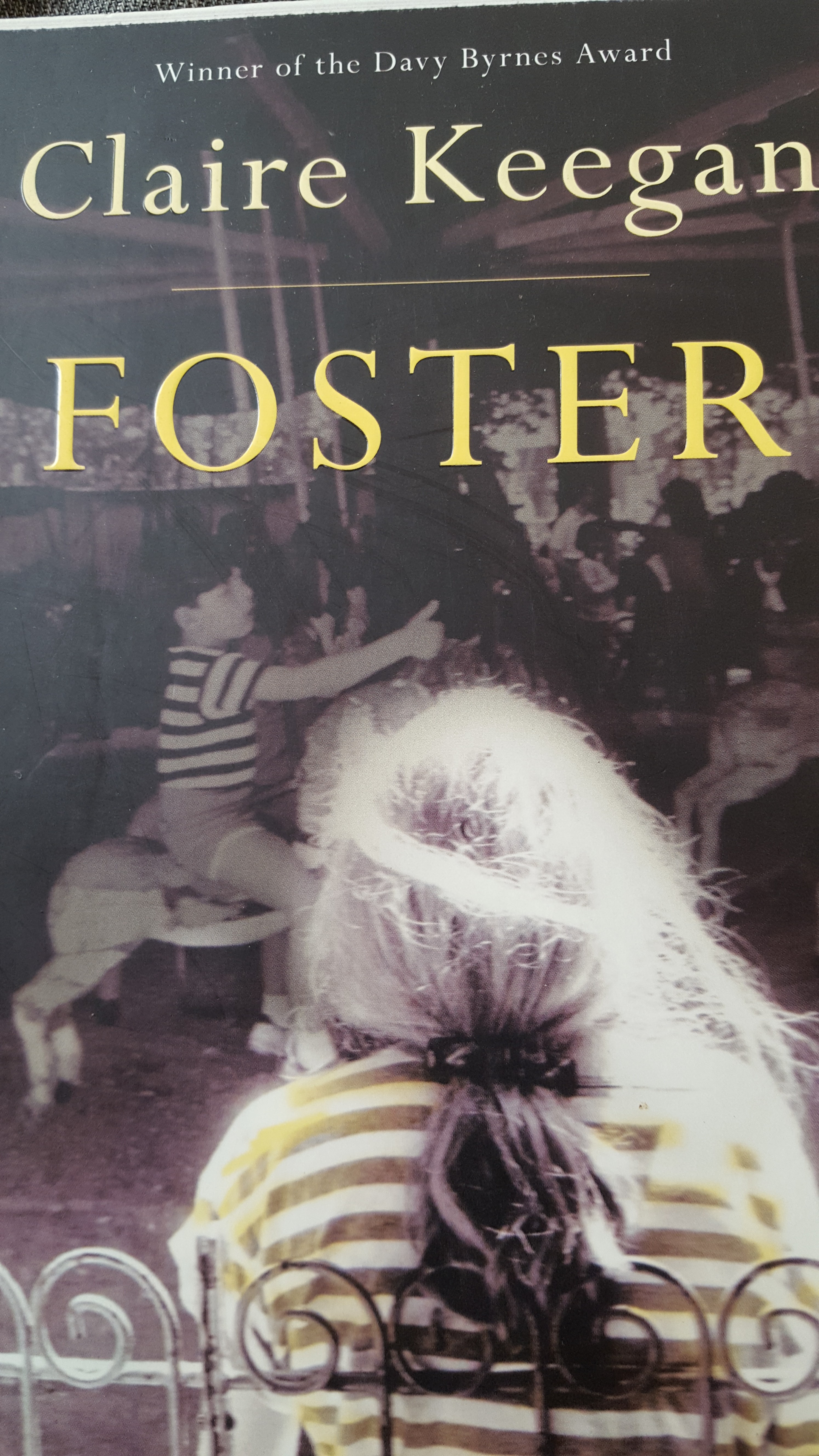
20160919_104639Claire Keegan Foster. I keep hearing writers praise Claire Keegan, an Irish story writer. This is a story grown up into a book, and is indeed tender and lovely. A girl is transported from her home, overwrought by children and poverty, to stay with a couple in the country while her mother has the new baby. She is let to flower by the love she finds there, and heals the couple from the huge aches of their own personal tragedy. The tale and the community is given us through the awakening insights of the girl. A little touch of the ghost story sneaks in, which it did not need, but this is a touching tale beautifully handled.

Paul Russell Immaculate BluePaul Russell’s the one writer whose books I pre-order. This one arrived and sat there a while; it looked more domestic than I wanted. Set in Poughkeepsie, its main cast is absorbed in a small town world of emotional triumphs and torments. (We last saw them 3 years ago, in the debut novel The Salt Point, but this works fine as a standalone read.) The one who got away comes back with his experiences of war in Iraq and the protection game in the oilfields of the Niger Delta. That gives the book its much wider angle and perspective – and I was glad to see the environment figure as a main issue. The central event is a gay wedding, two guys in their forties, all done very well.

Julian Barnes The Noise of Time. I was in France completing my own book about music in the 20th century, so hoped for a lot from this lauded new one from Barnes. Shostakovich is his subject – but it’s Shostakovich the amateur politician reaching compromises with the Soviet regime that we get, far more than the musician. The book ranges across his life, though we never see him deep in composition. Where did the Quartets come from? We don’t get to see it. The book begins and ends with three clinking glasses – it’s something, but it’s token music. The friendship between Britten and Shostakovich, that could make for a great musical novel. It’s not glimpsed here. Prokofiev comes across as some sort of huckster and the novel made me think Shostakovich was a mean little man, which is nonsense. Lots of effort, but some close insight into the creativity would have helped.

Robert Seethaler A Whole LifeA short book and indeed a whole life. Andreas is delivered into his mountain valley home aged four, orphaned and set to be abused. We stay with him through the twentieth century, as electricity and ski lifts raid the mountains. The book picks episodes on which it dwells, and so the detail is rich. Love and tragedy both arrive, and a wartime in Russian captivity, and finally ageing. For a new generation in the mountains, Andreas is something of a wild recluse. His is a marginal life. Not for us, the readers, though. We know his stories and he is central. This is one important thing a novel can do marvellously – make us know the value of lives on the margins.