Writing at 40,000 feet

January 14, 2016

1This blog is written at a height of 40,000 feet while travelling above the Black Sea at 492mph. It’s dark outside.

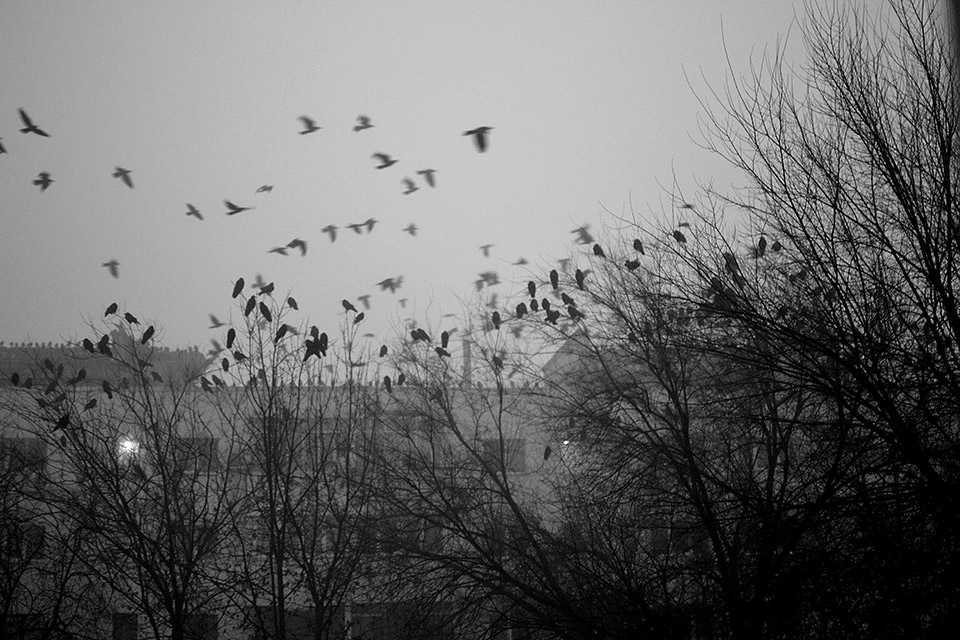
It has been easy not to write for the past two weeks. They were given over to a holiday in Goa, on the southwest coast of India. I read, and went birdwatching with daily zeal. At dusk we sat on our balcony and watched a wave of fruit bats break from roosts above the neighbouring mango swamp. They beat broad wings against the darkening sky.

It seems the holiday has restored me. On this long night flight back to Gatwick, as screens on the back of headrests show films all around me, I put down the book I am reading and wanted to write instead.

Five winters ago I was returning to Hull from time in Brussels, Bruges and

Zeebrugge. A novel had been cooking in my mind and the trip was part of its research. Closed into a cabin on the ferry, the first words stirred and I started to write. Now I’ve returned to it writing in the cabin of a plane.

It’s a vampire novel. Even five years ago literary agents told me the thirst for the genre was over, there was no market, but the book wanted to be written even so. It has had much of the nocturnal about it. I regularly woke at 5am to push the book forward. Once, in our Pyrenean hideaway, I looked up from one such early morning bout at the flapping of a bat against the window outside. It seemed right.

I redrafted the book as my Christmas treat to my self, completing it in the pre-dawn of my birthday. That draft was about adding clarity, and removing several thousand words. I thought the book was done.

Seems not. This time I’m adding words. Whole scenes just got expanded.

My body’s lightly pustuled with mosquito bites from India. Yesterday someone pointed to my leg. A tick had attached itself and was swollen with my blood. All good preparation for resuming a vampire book, I reckon. It will let go its hold on me one day.
 

The Making of Books

December 17, 2015

I teach writing and I write. That’s what pays my way in life. Recently I wondered what is most important to me – is it teaching, writing, academia? The answer was quite clear. Books. But that was an incomplete answer.

BooksBooks fill my shelves, they stack up on my Kindle, but that’s a library to keep me supplied with reading. Part of my library helps me teach or guides my research. Individually they are not important to me. I could let all my books go. Sooner than build more bookshelves, I cart bag after bag to the charity stores.

So it is not books that are important to me. It is the making of books.

Some of them are my own. I can write one in about three years but they generally take decades to complete. Draft after draft, one book rests while another moves forward. I wonder if a draft is complete, put it out into the world, and then measure the fullness of readers’ responses. If I sense any hesitation, the book comes back into my fold. It needs more work. When I write abook it has to be about the book and not about me. A book has to grow into its fullness before it heads out into the world. It carries the author’s last name in the way a child does its father’s, though I’d quite like them to have just their title.

In teaching writers, you guide them to write a good sentence first of all, with a shape that leads it to the next one. It’s an incremental game; you help writers build up their skills and their stamina. To produce a book requires perseverance and craftsmanship and inspiration and imagination and the long haul. It also needs the writer to get out of the way, to stop knowing what the book ought to be and actually allow it to be.

Not every student writer will write a book (or at least not a good book). The writing process still has great value on an individual level. It is a huge transition, however, from self-expression to writing that takes life in a reader’s mind. Writers with early flair often fall by the wayside while the dogged ones persist. Writing a book is not easy.9781909954168

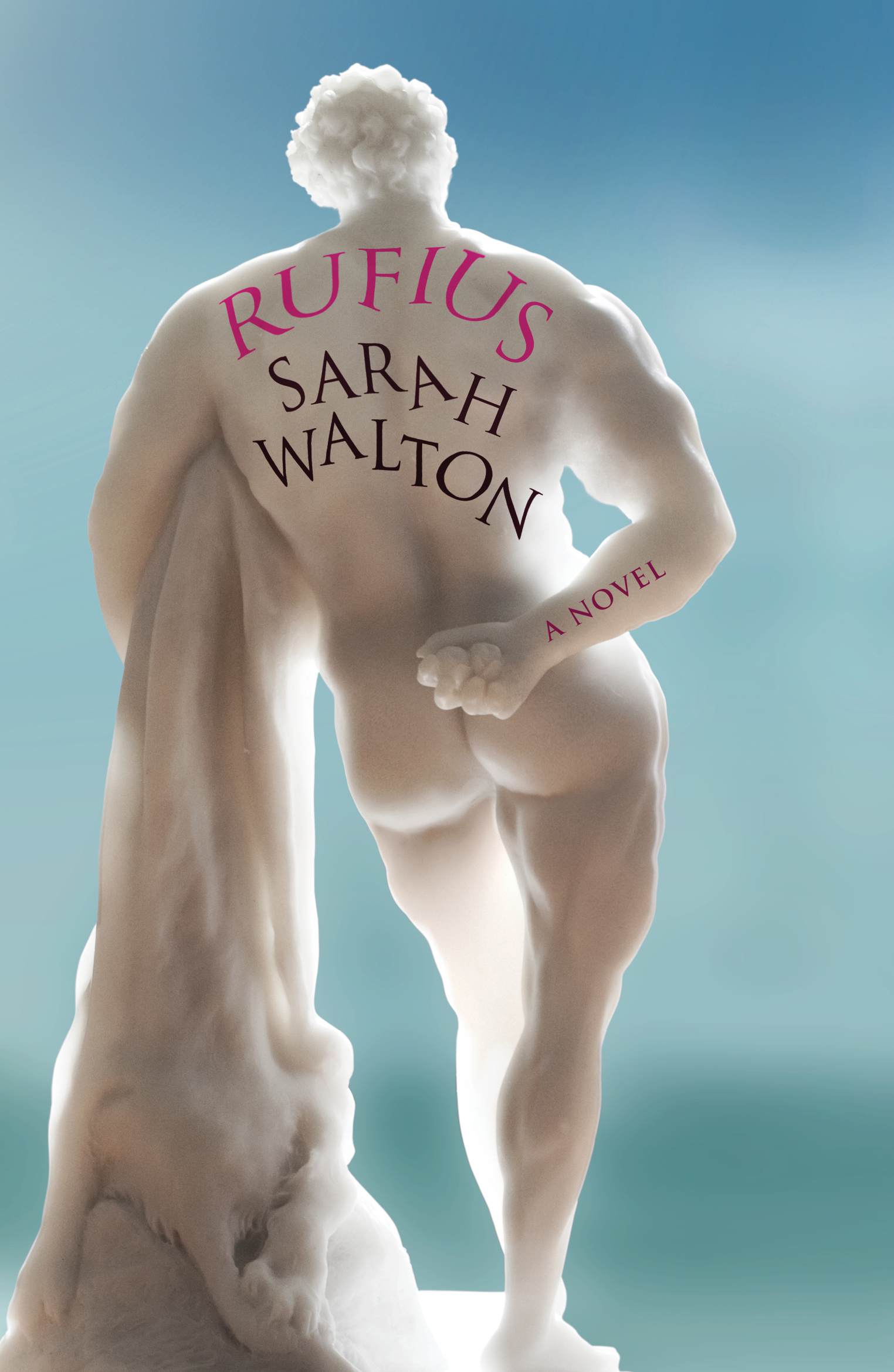
I have spotted the potential for books in friends, and helped to steer them home. At university level I take on PhD students. With my first, I saw the potential for a book in two pages among ten that were submitted. The part-time PhD took that writer five years. It consists of a novel, plus 20,000 words articulating its creative process. The book is magnificent. Called Rufius, it’s Sarah Walton’s debut, out in February.

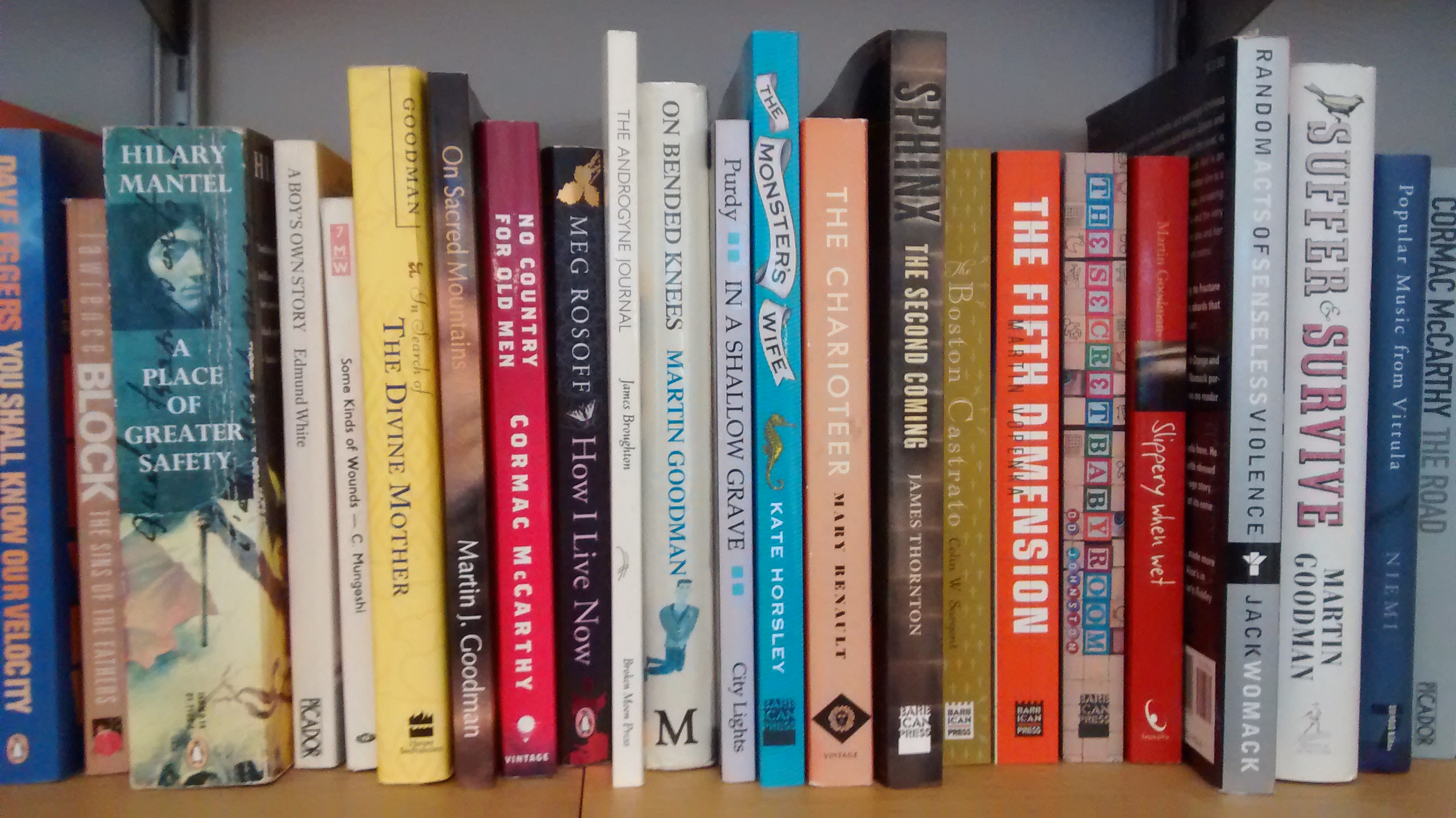
It’s a Barbican Press title. I set up Barbican Press a few years back, because the making of books is what is important to me. I don’t need to write them, because while I write the sorts of books I want to read, others do so to. Writers I have loved and who helped shape me include Patrick White, John Fowles, Patricia Highsmith, Jane Bowles, Janice Elliott, James Purdy, Paul Bowles, Harry Crews, Mary Renault, Albert Camus, Michel Tournier, Mavis Gallant, Jean Genet. They are wonderful writers but hardly mainstream. As an independent press I can give writers like those their way into the world.

The writeBoston Castrator Steven Saylor said Rufius would be unpublishable in the USA. It touches areas of sexuality that do not sit comfortably with a commercial house. So does Colin W. Sargent’s The Boston Castrato. It’s another wondrous book, as good as you’ll find. I came across it when I went to Lancaster University as an external examiner. Colin had written it as a PhD. I waited some years to see if it could find a mainstream home, and now I am proud to publish it. (It’s out next March.)

Books have made my life possible and expanded the possibilities of what I can become. I am a minority reader in terms of my tastes, but there are multiple thousands like me out there. My business is the making of books to fuel and fill those readers’ lives.


Sitting with the opposition – Hull v. Leicester

November 1, 2015

Hull FCI’ve been in Hull for seven years now … but have been supporting Leicester City for fifty.

The first time I visited Hull’s home ground, the walk to the KC Stadium was grand: I was part of a mass family outing, generations of Hullites full of banter and cheer. I peeled off to enter through the Leicester turnstile like a traitor. A Leicester man stood in front of me the whole game, screaming vile abuse at the Hull crowd, urging Leicester players to break legs. It seemed abusive, coming to East Yorkshire and treating your hosts that way.

Tuesday I was back, in the East Stand among the Hull supporters, Hull vs. Leicester in the Capital One Cup. I’ve never looked out on a game so objectively. That surge of passion when Leicester scored? I kept it on the inside and stayed in my seat. When Hull scored, I stood with others so I could see and offered gentle applause.

The game wasn’t bad – it picked up in the second half and got a buzz going during extra time. Ben Chilwell made his debut for Leicester, 18 years old with a hairstyle and alertness and posture that seemed to fit fifty years ago – he has a strong future. Most exciting were the chants. The North Stand set it off – ‘The North Stand, the North Stand, the North Stand Hull City’. Women might have been in the crowd but it came out as a vast male roar. The East Stand sang their own version, a call and response, but that North Stand was a choir like no other. The chant was sustained, again and again, swelling in volume like waves in a North Sea storm.

The Hull supporters did scream out their own abuse, but even that was mild-mannered. ‘Cheats!’ they yelled. ‘Cheats!’

It went to penalties. For ten goals I had to suppress my standard fans’ response. Leicester is a buzz of a team to support at the moment, 3rd in the Premier League as I write. I check for online news of them every day, more than once just in case – the rational part of me thinks I should know better and then I click again.

Hull won, as they did the first time I saw the two teams play. I walked away with the home supporters, not minding that they were happy. Maybe we can meet in the Premier League next year. Maybe I’ll sit in the King Power Stadium and see how it feels to welcome Hull.


Darwin’s seedlings

October 25, 2015

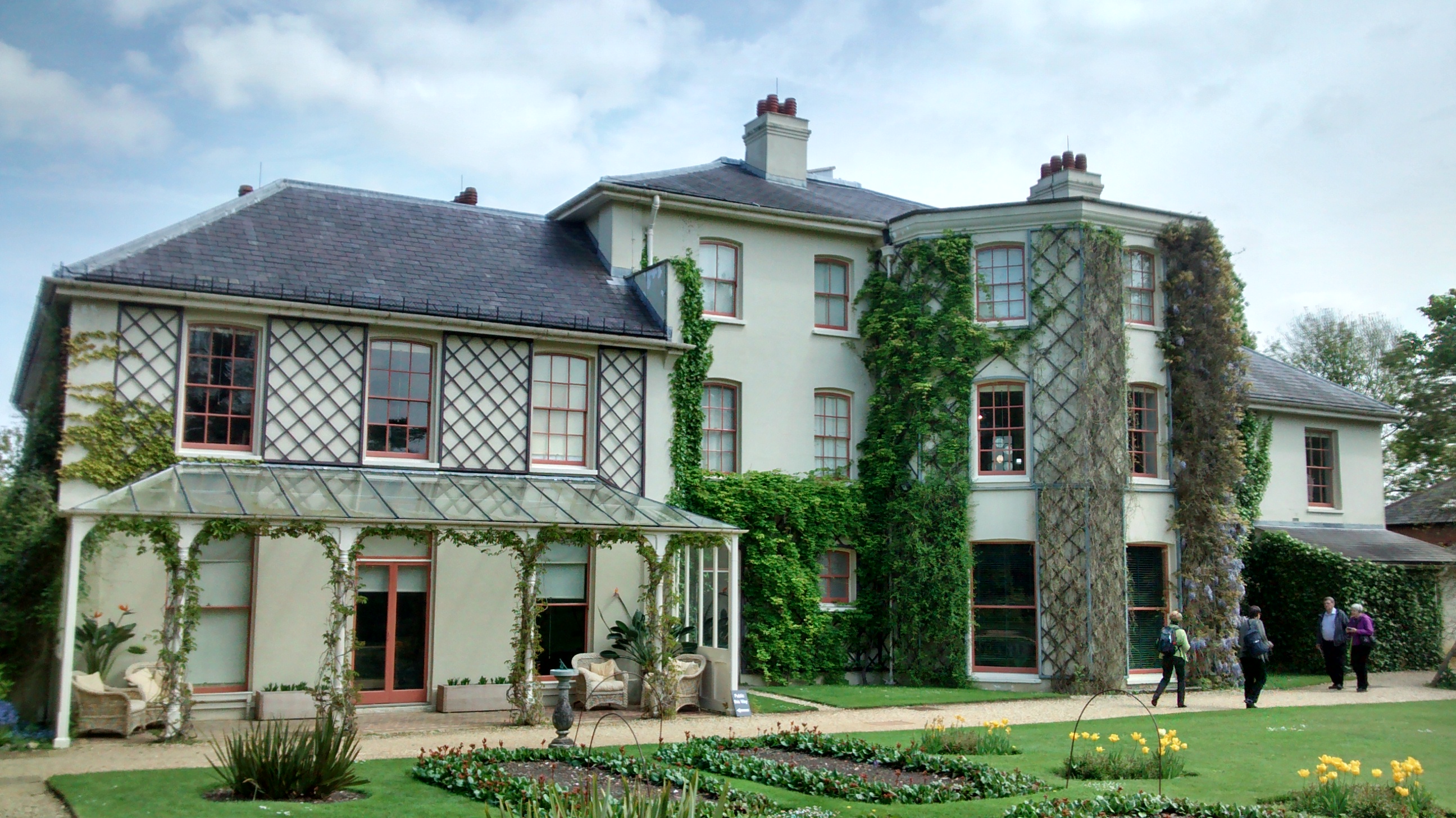
English Heritage, like the National Trust,  maintains the homes of English writers. They serve as walk-in memorials and attract countless thousands of pilgrims a year.

The English are island people. We look out at the world as a separate thing, which we can visit before weIMG_20140504_124121718_HDR come home. An English writer’s room is akin to that. A garden is outside, dim English light filters into the room, where the writer sat and conjured tales that reach around the globe.

Charles Darwin was a scientist but most visit his home to find the writer. The Origin of Species subverted the world’s view of itself. That’s what a great writer does. Pilgrims stand, subdued, and look at the chair where it was written, the great man drawing the writing board across his knee.

Upstairs there are exhibition rooms. That’s fine, but that’s not what we want. We have come to enter the domestic round of the man’s life, to see the books in his study and the setting on his dining table.

An apple orchard grows beside the main path. Gardeners are planting it to include the varieties Darwin knew in his time. At the far end of the property is Darwin’s walk, a woodland loop he circuited for his daily exercise. Most visitors don’t reach that far. And in the long Victorian greenhouse boxes of seedlings grow, such as Darwin loved and tended when he walked its aisles. Every spring they sprout, memorializing Darwin anew.

The Russian Cemetery, Sitka, Alaska

October 18, 2015

Bad news travels as fast as mud: the immigration officer at Seattle airport knew we were flying on to a disaster zone. Sitka sits on a mountainous island in southeast Alaska. 24 hours of constant rain turned a hillside to mud which swept aside a house under construction. Three young men working it were instantly buried. It would take a week to dig out their bodies and the city was wrapped in grief. ‘One 2015-08-21 22.56.52day the landslides will be cleaned up,’ the mayor said, ‘but Sitka will never be the same.”

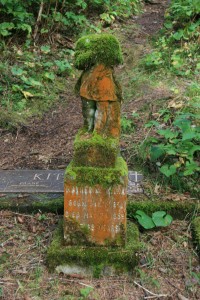
Sitka once belonged to Russia and was a Russian outpost. A guidebook claims it’s a good place for birdwatching though even the birds have gone. All the memorial statues are beheaded and tombs slide into overgrown paths. A chain of beads with a cross was looped over one gravestone, and a bunch of dead flowers was laid at another, but in truth this is wilderness and not a safe place for the living to walk. Russia sold Alaska and a community migrated, leaving its dead behind.

An ancient man, his spine bent, tended an immaculate garden with great care. His house fronted the high street. He was bent to his plants whenever I passed. When he goes, which can’t be long now, Sitka will never be the same.

The Lovely Life of Arnold

October 2, 2015

j5

[Native Americans had the berdache tradition, in which a boy might be recognized as ‘gay’ from when very young. This is seen as a cause for celebration. The family with such a child was seen as blessed and complete. I began a series of stories, transferring this notion to the west. Tales are told by Arnold, in seven year leaps. Here are the first two stories, aged 7 and 14. In ongoing tales he has reached 42.]

Age 7


I’m precocious. But I’ll grow out of it.

That’s what Mom says.

I’m gay too.

Pop tells me that.

I’ll always be gay.

It’s a blessing, Pop says.

I’m seven.


‘He’s my boy Arnold,’ Pop says, to strangers he meets on the street. ‘He’s seven. He’s gay.’

‘That’s nice,’ they say. ‘Will you send him to a special school?’

‘No. We want him to mix with others.’

‘Lucky them. I bet he’s expensive though. All those refined tastes.’

‘We can afford him,’ Pop says. ‘Do without the rubbish, and you can always afford a treasure.’


I’m very beautiful.

Pop says I’m pretty. Mom says I’m handsome. They put them together and say I’m pretty handsome.

I’ve got dark hair. Black, Pop says. Black as a priest’s gown.

Dark as a den of thieves, Mom says, and giggles. She wants me to lead a racy life.

My eyes are blue. Like the sky reflected in an angel’s wings.

My complexion is fair. Like the first blush of dawn over snow.

My body fits me to perfection.


I’m funny, they say. Not odd. Just funny because I make them laugh. I see things in a different way, and say so clearly.

It’s because of my sexuality, they say. It gives me a fresh slant on life.

I’m their only child, so it’s perfect that I’m gay. A little bit of her, a little bit of him.

‘The best shape in life is round,’ I say. ‘Like a wheel and a coin and a ripple and a sun and a moon.’

They laugh, and Pop picks me up into the sky.

‘You’re wrong. You’re not round. You’re long. You’re best. You’re our son and our moon. Open your mouth.’

I open it wide and round, like the dark side of the moon. Mom pops a pink fondant inside. The taste explodes in my mouth to thrill me.

‘Pink is the best colour in the world,’ I say, when I can speak again.

They laugh. Mom kisses one cheek, Pop the other.

‘That’s our boy,’ they say.


‘Oh the poor boy,’ shop assistants say. ‘Is he blind?’

I wear a black eye patch over each eye.

‘No, he’s gay. We’re training him.’

‘How?’

‘He’s very sensitive to colour. Always chooses pastels. His other senses are more hidden.’

So they hand me clothes and I feel for their texture. Run the materials over my skin.

I never change in cubicles, but always out on the shop floor.

‘You’ve got eye patches on,’ Mom explains. ‘Who can see you?’

It’s a game. I like to play along.

‘Ooh,’ they say, men and women both. I hear the gasps of breath in their adult throats. They love the revelation of my skin when I stand without my clothes. ‘Can we touch?’

‘Be our guests.’

They touch me with a finger, then a hand, then they stroke me. My flesh is cool and their hands are warm

I try on some clothes.

‘How do you feel?’ Mom and Pop ask.

‘Nude.’

When I say that, the deal is done.

‘Know your own flesh,’ is Pop’s advice. ‘Few people do. Know your own flesh, and settle for nothing less. You should feel nude when dressed. Clothes should be gossamer to the skin.’

They lead me by the hand and through the shop.

‘Can he see?’ customers ask.

‘He sees things you and I never dream of. He sees deep inside himself and inside us. What we hide from ourselves, he dares to be. He’s gay.’

Out on the street, the eye patches are slid from my eyes. Neon lights are death to beauty. Daylight allows me to glow.

I face my reflection in a plate glass window.

‘You’re a vision,’ Mom and Pop pronounce, and stand indistinctly some way behind me, happy to be my background.


‘Do you know the most beautiful sight in the world?’ they ask.

‘Me,’ I say.

‘No,’ they say.

I am shocked.

‘You are beautiful, but some day you will find a boy or a man who is as beautiful as you. The most beautiful sight in the world is two bodies holding each other.’

‘Why?’

‘Because everything belongs together. When two bodies come together, it’s a memory of that fact.’

They hug when they pass each other, and link arms on the sofa. They roll with each other in bed.

‘I don’t think it’s very beautiful.’

‘Some day your prince will come.’


They invite other boys around to play.

‘But our son’s not gay,’ the parents say.

‘Never mind. So long as he’s happy,’ Mom and Pop reply, and lead the boy back to our world.

‘You’re gay,’ the boy says. ‘You want to see my weenie.’

And he pulls his pants down. His weenie is tiny like mine.

‘Now you’ll want to see my ass.’

He turns around. I never see my own ass so it is a bit more interesting than the boy’s weenie, but not much.

‘Now you show me yours.’

‘Why?’

‘That’s the deal. I show you mine and you show me yours.’

‘Are you gay too then?’

‘No I’m not.’

He hits me. I don’t know why. Mom and Pop say some boys get angry because they’re not gay. I hit him back, then we play for a bit, have supper, and go to bed.

I hold my friend in my arms, and he holds me.

In the night Mom and Pop creep into my bedroom. The floorboards bend beneath them. They stand and they watch us.

I know what they are thinking.

‘This is the most beautiful sight in the world.’


Age 14


For my 14th birthday, among other lovely things, I had a small ivory comb for my new pubic hairs.

I’m a young man now. The Saturday after my first wet dream we had a ritual. I scraped the come off my leg with a nail file. (It was so thick and white, no wonder I was dizzy the day it came out.) We put it in one of Mom’s ointment jars and carried it to the river.

‘It’s my son’s come,’ Pop says. ‘His first. His come of age. Waggle it, Arnold. Make sure it all comes out.’

We watch the tracery of white catch in the stream and go twisting away. Others watch too. There’s quite a group on the riverbank. They are attracted by the flags we’ve planted. Mom puts a 78 on the old wind-up gramophone. It is the movement from gay Schubert’s The Trout Quintet. My sperm comes to life like fish in the river.

Pop makes a speech.

‘Today we celebrate the sexual maturity of Arnold, our gay son.’

Mom claps her hands, and applause ripples along the river bank as others take her lead.

‘This is the proudest day in a father’s life. My own son’s so full of maleness he pumps the stuff out. I’m your typical straight Pop. I’ll never know the joys of being gay. But I can dream. I can cheer from behind as my son marches out into that brave new world. My potent son in an exciting world. A gay soul in his young man’s body. Let’s raise our glasses and drink. To Arnold, our young gay adventurer.’

Mom had filled glasses with bubbly.

‘Bottoms up,’ everyone says, and they tip the bubbly down their throats in single gulps.

I smile as they take photographs from above. Sunlight plunges into the surface of the river behind me. The backdrop to my coming of age photo is this torrent of river, a surge of wet life.


We holiday in the mountains.

Each day we take a path that zigzags up a mountainside, reducing its slope. We pause at some bends to look out and smile. It’s good to be up above the world.

Some days we climb to mountaintops. Other days we are happy to stay below the tree line, or content ourselves with rivers and hills.

It’s summer. I stroke a horse chestnut that joins its branch among a ring of long flat leaves. Its spines are soft and bend beneath my finger. There’s a light inside the chestnut where the nut will grow.

That’s how it seems. The chestnut shocks me. The sun shines hard and burns the world of colour, yet this chestnut’s young green is so bright. I cup it in my hands and the tree shimmers beyond the tears that fill my eyes.

‘It’s nature,’ Pop says as they watch me. ‘The beauty of nature.’

I bring back my hands to dry my eyes.

‘It’s in your nature to cry at beauty. That’s why we come here. So you can be in nature.’

A moth flies between us. Its wings beat to excite gusts of air that blow it here and there. It lands and settles into the clean lines of it colours. Brilliant black, stark white, ember red. Beneath it spreads the purple of a thistle head, one spur in a wide reef of thistle. Butterflies swim through the blue around it. Bees tunnel through its green shade.

We watch the display, and sigh. Butterflies ride the flurry of breath.

‘You don’t see this in a city, Arnold. Cities arrange their own exhibitions. Something like this is too free. You’re gay. Gayness is a great gift to a city. They try to stamp it out, but they want it really. Something in everything wants to be free. You’re the most exotic creature that a city can have.’

Mom skips high to draw her face level to a damselfly’s flight. Its black wings lead her on a dance through meadow grasses. She takes barefoot steps into the edge of a lake.

We watch her. The damselfly rises from a boulder, hovers a circuit above the water, and returns. The blue of Mom’s dress is broken up and played with by its reflection in the water. It is the same radiant, lapis blue of the damselfly’s body.

‘The city can never snuff you out, Arnold,’ Pop says. ‘It’s in your nature to shine. When you feel dim, come back to this nature. It’s your nature. You carry it with you.’

Mom turns. Her smile grows as she sees us. She steps from the water to join us on the land.


‘You’re a model, Arnold,’ the teacher says.

I stand on a podium in front of the class. Jagged lines like chalk lightning rods are drawn on the blackboard behind me, to halo my body.

The boys and girls open their eyes. Some have elbows on their desks and cup their chins in their hands. Faces are dreamy.

I’ve given the speech for the second time. The first time the class was only able to stare. I’m wearing workman’s overalls. It’s the sexiest uniform there is. I know why the class can only stare. I do the same. I stop at workshop doorways, gaze in at mechanics, and time grows as languorous as on a sundial. The mechanics smile and return to work, their bodies more fluid for being noticed.

My overall is raw silk. A purple verging on the blue of night, with trim beige buttons running from my crotch to my throat. The collar is unbuttoned to free my throat as I speak.

‘Now you see what truth looks like,’ the teacher told the class after my first reading. ‘I have never known a child be so true to himself. Thank you, Arnold. But you dazzle us, I’m afraid. Would you read it to us again? We need to hear the truth as well as see it. Now please, boys and girls. We’ll all close our eyes.’

The piece I read is the founding manifesto for the school’s gay society.

The teacher lets the silence hold after my second reading.

‘Now, who….’ she begins.

I watch the class as they hear her question. The eyes of my friends are startled by her words. Their focus shifts from the wide-awake dreamworld conjured by my voice. It narrows towards their usual perspective. They begin to look out from their personalities instead of their souls.

But the teacher’s voice is soft. The transition is gradual.

‘… who can remind us of one, any single one, of Arnold’s arguments?’

My manifesto is a delicate thread of logic. I make a virtue out of words. That’s what Mom and Pop say. Mom took down the manifesto in shorthand, so the concentration would stop her crying at its beauty, but she dropped tears onto the paper as she copied it out. I read around the smudges. ‘Heaven on earth,’ she said as she wrote. ‘It’s a manifesto for heaven on earth.’

The class blinks. No one raises a hand.

‘Now you have heard the sound of truth,’ the teacher tells them. ‘You heard the care that Arnold gives to his speech. The enunciation of every syllable, the bell-like tones of every word, the graceful flow from sentence to sentence, the meaning in each pause. We understand Arnold’s manifesto for we hear it in each pause. We hear a gay sensibility at its finest. Neither hurried nor casual. A young man dares to be responsible for the beauty in his life. May I borrow your manifesto, Arnold? I shall type it onto a stencil. I wish us all to study it as a class text.’

I hand the manifesto to her.

‘And that other piece of paper?’

It is a scroll of parchment. Anyone can propose to form a school society, but at least five others must join before the school gives its blessing.

‘It’s my enrolment sheet,’ I explain, and untie the ribbon to let the paper hang low.

‘Who would like to join Arnold’s Gay Society?’ the teacher asks. ‘A society dedicated to refined sensibilities.’

Everybody raises a hand. A line forms around the teacher’s desk. People squint and write carefully, for they are proud of their new signatures and want them to look good. When the bell goes, no one hurries off.


Mom and Pop are members of a mail-order gay video club. The postman’s gay, so it gives them something to talk about. They all agree that a gay video club is the most gay-friendly face of the media.

They rent lesbian movies too, to show we’re not narrow-minded. Pop is interested. Mom’s curious. I go to the kitchen to make us pots of tea.

We have our favourite actors. Mom likes one because he blushes. Pop likes one because he’s got a dick so big he has to hold it upright. Pop finds that quite sad and companionable.

Me, I like the one who’s nearest to my age.


I like sport.

In every other subject I’m top of the class.

That’s why I like sport.

I’m good at it, but others are better. It’s the one time other boys get a chance to compete.

I like fourteen. Being fourteen flows through me. It does great things to my body every day. I’m supercharged. There’s nothing I can’t do. It’s like surfing the biggest breaker, on and on, riding free and high.

Other kids though, I see it kills them. They’ve got this sexual charge like never before. They’ve got full tanks. And all they can think about is how it drives the piston. That’s cute, but it’s not the whole picture. Sexuality’s not what you can do. It’s what you are.

I like sport.

I like watching the wind feather cotton muscle shirts as kids leap toward the hoop.

I love swimming. Arms arch, mouths gape, as friends freestyle through the blue of the pool, dripping with speed. Shoulders surge through butterfly and breaststroke, water pushing as waves about them. The poise on a diving board, the angularity and stretch of the dives. A swimming pool is a place of extraordinary visions.

The athletics track too. The gazelle-like flow of middle-distance running.

And I love the games they play in sand. Kids whose eyes dart everywhere, I watch them focus in on themselves. I love those moments of stillness. Then bodies loosen into speed. High jump. Triple jump. Such bouncing, unbounded energy. I love that too.

Most visionary of all is the javelin. Timed to perfection on summer days, in late afternoon when the sun is low and light is fetching. Freshly bronzed limbs are taut and shiny. Legs pump into the rhythm of flight, arms strike, fingertips quiver, eyes expand, bodies span wide and the javelin spears the sky.

Then the boys shudder to a halt.

So much work, so much beauty, so much hope. Even when the javelin wobbles straight to the ground, I find it moving somehow.

I love watching sports.

‘Look out,’ they say, in the locker room afterwards. ‘Arnold’s watching.’

And they laugh for me, and drop their towels to strut naked and with pride.

‘Love the world as we love you,’ Mom and Pop say.

And I do.


[First published in the Harrington Gay Men’s Fiction Quarterly]

George R.R. Martin’s Fevre Dream – Terrific, but is it literature?

September 19, 2015

fevre-dream-george-r-r-martinI’ve spent more than a solid day of my life already watching GAME OF THRONES till I’m up to date. Fabulous settings, great dialogue, some marvellous characters. Strong set-pieces too: the George R R Martin Fevre dreame zombie attack in the last series was powerfully sustained.

I picked up the first book in the series in a bookstore, read a page, put it down. I wasn’t gripped, and was doubtful of committing hours of reading time. So Fevre Dream is the first George R.R. Martin I’ve read.

It’s terrific. Set along the Mississippi in the mid-19th century, you won’t find a better novel about steamboat life. You’ll be hard pressed to find a better novel. The captain and steamboat owner Abner Marsh is a fully rounded character in every way – fat, warty, splendidly human, beset by the world yet passionately loyal.

And of course, the book is about vampires. They come as two factions (like Octavia E. Butler’s Kindred) with their own life and death issues and moral quandaries.

In some ways it’s obviously a genre book – horror/vampire. In all ways it’s real literature. Splendid research, true sense of location, full developed characters, clear and well wrought description, ace dialogue, and a plot line that leads you beyond the obvious with a moving conclusion. And if you choose to go deeper, plenty to reflect on on the human condition, the nature of evil, the sustenance of friendship.

For me, it’s in a class with an all-time favourite, Dumas’s The Count of Monte Cristo. As worthy of regard as Tim Gautreaux’s excellent historical Louisiana novel The Clearing.

I’ve just written my own vampire novel, which makes me a particularly competitive reader. There are a fair few vampire novels out there. I read them, appreciate them, and find reasons to trumpet my own. In the spirit of Fevre Dream, however, I have to accept one thing of George R.R. Martin – he’s the bloodmaster.

Corporations give fortunes to top lawyers to save them from justice

September 18, 2015

I asked a top lawyer, a QC and sound environmentalist, whether he had any moral qualms about defending corporate environmental offenders. ‘Not at all. A surgeon would operate to save the life of Jack the Ripper. It’s the same thing.’

If Jack the Ripper were in police custody in a secure ward maybe. Saving Jack the Ripper’s life so he could continue a murder spree would be different. Sadly the law is not an even playing field. Corporations give fortunes to top lawyers to save them from justice, not to provide it.