Highgate Cemetery & Douglas Adams

August 7, 2015
Douglas Adams' grave

Douglas Adams’ grave

In Highgate Cemetery, a forested hillside contains tumbling tombs. Star attraction is the grave of Karl Marx, beside a wide and gravelled path. This time, I came to hunt down other graves.

Douglas_Adams_Tombstones

Lord Strathcona’s tomb

As a personal link, I once owned a house built into the mansion grounds of Lord Strathcona in Glencoe. His old tennis court was lost in the corner of our land, and exotic trees studded the garden. The nearby lochan was dug in the shape of a maple leaf, to help his Native Canadian wife feel at home. I pondered writing his biography. It would have been a tale of the making of modern Canada. Instead I visit his tomb, just inside Highgate’s entrance.

Jim Stanford Horn is only known to me by his gravestone; made like a book, with twin penguins linked by their wings. Jim Horn died in 2010, aged 34, before same sex marriage allowed the word ‘partner’ to become ‘husband’. At least that’s how I read this gravestone,  a tribute to reading and to a couple’s love.

Jim Stanford Horn

Jim Stanford Horn

In a more abandoned zone of the cemetery I find the Australian painter Sidney Nolan. His stone is already weathered. Its inscription anticipates the arrival of his wife his wife Mary, but she had other plans.

Sidney Nolan grave

Sidney Nolan’s grave

Up above the path, a tiny gravestone remembers Douglas Adams. Still young and hugely successful, he moved to Santa Barbara, California. I envied him. He died soon after. Readers come and place pens before him, all ready in a stone tub, in case the writing urge sticks with him out there in the universe.


This was the first in a ‘Missing Bodies’ series you will find on this site: ten photos & short essays on ways of grieving, conceived as part of the Crossing Over research network.  Find links to the other nine below.

The Theresienstadt Family Camp

My father’s grave, Rempstone

On my mother’s grave

The Zen master

Death on the River Lee

Philip Larkin’s grave

Darwin’s seedlings

Sitka, Alaska

Killing & Remembering in Clapton


A supernatural thriller & a stormy place

July 14, 2015

In 1994 I moved into coastguard cottage #6 in Birling Gap, East Sussex. It’s an iconic place in England; whenever the media needs to show coastal erosion, this run of homes is the feature. Another couple of the run of terraced houses have fallen into the sea since I moved out.

Coastguard cottages, Birling Gap, Sussex

Coastguard cottages, Birling Gap, Sussex

This picture, from my return last week, captures some of the peculiar summer charm of life by the sea. I walked up to the lighthouse, the mist so thick I was right beside its stone wall before I could see it.

That little cottage and the lighthouse, now a B&B, feature strongly in my novel Look Who’s Watching. I like building fiction around real places. The novel’s main Santa Fe setting was another home, one we rented in the winter of 1995-6. Santa Fe Airport; the IMG_6624Buddhist stupa on Airport Road, Santa Fe; the private dining rooms of Rules restaurant in Covent Garden; the beach at Bei Dai He near Beijing; a flight in a private plane – if I don’t already know a place, I tend to visit and spend time there before bringing it into fiction.
It was good to go bad and realise just how elemental that time in the cottage was. I’d recently said to my then agent, Deborah Rogers, ‘I can’t keep up the writing, a job, and the social life,’ and so in the move to Sussex I surrendered the social life. I did my teaching job by day, would return home and walk up the lighthouse and back, and then write. Winds drove the rain in waves through the letterbox and spume from the sea swirled around like snow.

Look Who’s Watching is a supernatural thriller, with a take on the theme of Buddhist reincarnation. It was triggered into being after a weekend in Montana, camped out in fields while the Black Foot tribe transmitted their stories outside of their own people for the first time. We were driving away from that period of isolation and stopped off at a log diner for Sunday breakfast. The woman behind the counter heard my English accent and expressed her sympathy. She was clearly very troubled. ‘Don’t you know?’ she asked, when I asked what was wrong. She told me that Princess Diana had been in a serious car accident in Paris.

I went to a call box and phoned home. It seemed right, to reestablish order in that way. Driving onward, I said, ‘Even now someone is writing the book about this,’ upset at the thought. And promptly, the idea for this novel began to play itself out. It took an English actress as its lead rather than a princess (I know more actresses than princesses), with the paparazzi on her tail.

I was also attempting to write a bestseller. James, my partner, told me I had to investigate the genre first before throwing myself at it. I duly did. One element that was in all bestsellers was a chase – hence the climactic run down the hill from the lighthouse and the chase scene across the Downs to the cliff edge at Beachy Head, paparazzi riding their motorbikes.

It’s not yet a bestseller, despite valiant work from Caffeine Nights. It plays at many levels, a major one being an investigation of media barons. Rupert Murdoch once dismissed the Dalai Lama as ‘an old monk in Gucci shoes’. The book is written as karma for that comment.


Jim Shepard’s THE BOOK OF ARON

July 12, 2015

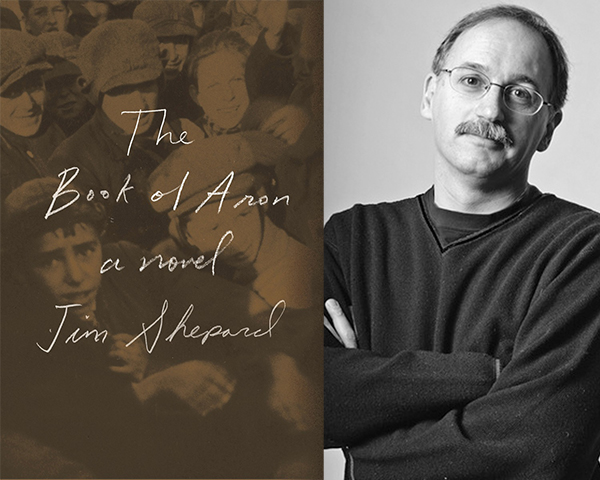
book-of-aron-with-jim-shepardJim Shepard’s tender new novel, The Book of Aron is set in the Warsaw ghetto. Aron is the teller. The book collects the sharp lives and conversations of the children and adults around him, each a point of life in the face of death. Details are vivid, like hair turned grey by a covering of lice, and simply placed. The book closes with Aron coming to know Korczak, a doctor who runs an orphanage. A historical figure, he becomes a character in a wondrous fictional reckoning. There’s much to love about this book.

Jim Shepard is one day younger than me, and I had never heard of him before now. So there’s some reassurance there for doubtful days, in quiet persistence getting you noticed. I look forward to gently working through his oeuvre.

Rupert Thomson selects two books to destroy

June 9, 2015

31Im8Lc-6wL._BO1,204,203,200_Which books should a writer obliterate? Rupert Thomson chose two at the Stoke Newington Bookshop last night – his novels Soft, and Air & Fire. His reason for doing so is that he always felt he would write twelve, and has now begun his twelfth. Could he do a deal and wipe two books out of his catalogue so as to write more?

My own view has been that a writer can write however many books, but before death should select the best five to be the complete oeuvre. The rest can be sealed in some archive. Five seems to be enough for any one writer. More would crowd out reading time for better books by others.

Rupert Thomson is often set up to be taken as the UK’s most under-acclaimed writer – indeed, Charles Palliser made just such a claim in his introduction last night. I, of course, like many others, feel that tag belongs to me. Hilary Mantel used to feel it about herself. I found myself making comparisons all through the evening. Rupert has just finished a third draft of a new novel, and so is a third of the way through, reckoning on completing nine such drafts. For me the surprise there was not in the quantity, but in the counting. Since my novels seems to take twenty years or more, I guess its fair that I lose count.

I’ve a number of Rupert’s books on my shelves, to be resumed. He rivals Nicola Barker for providing my greatest number of false starts (though Great Expectations still holds my record for a single volume). His most recent one, Secrecy, broke my duck and pulled me right through to its close. It’s a dark adventure set in 17th century Florence, involving a maker of wax figures, some terrific romps across Gothic countryside, juicy secrets and wild characters. Recommended for a summer read.

The role of narrative and argument

May 30, 2015

MartinMy big writing projects can take decades. I’m not slow, but redraft a great deal. Of late, I’ve felt a desire to clean the slate. Two novels are ready to go, and a narrative poem. I’ve one more novel, this one for young adults, to round off.

My big task at the moment is a book on public interest environmental law in Europe, for a mainstream audience. That latter aspect provides me with a major writing challenge. I’ve long contended that narrative equals argument, though now have to accept that’s not so. They reinforce each other, but don’t replace each other. Of old, I’ve been stronger in narrative than argument. I have to turn that around.

I picked up another project recently, one barely nascent, a memoir. It’s interesting how such this new habit of providing a line of argument had bitten home. I find I’ve no interest in simply delivering a narrative version of my life – an reasoned argument feels much more interesting. It would be an examination of suppressed memory, based on personal experience but reinforced by wide research.

More immediately, it’s back to the task of writing about the fight for better air quality in Europe.

Will Self and the Creative writing PhD

May 28, 2015

Will-Self-014In his piece on the Death of the Novel in The Guardian, Will Self comments on his own PhD Creative Writing student:

Creative writing programmes burgeoning throughout our universities are ‘a self-perpetuating and self-financing literary set-aside scheme purpose built to accommodate writers who can no longer make a living from their work. IN these care homes, erstwhile novelists induct still more and younger writers into their own reflexive career paths, so that in time they too can become novelists who cannot make a living from their work and so become teachers of creative writing. In case you think I’m exaggerating, I have just supervised a doctoral thesis in creative writing: this consists in the submission of a novel written by the candidate, together with a 35,000-word dissertation on the themes explored by that novel. My student, although having published several other genre works and despite a number of ringing endorsements from his eminent creative-writing teachers, has been unable to find a publisher for this, his first serious novel. The novel isn’t bad—although nor is it Turgenev. The dissertation is interesting—although it isn’t a piece of original scholarship. Neither of them will, in all likelihood, ever be read again after he has been examined. The student wished to bring the date of his viva forward—why? Well, so he could use his qualification to apply for a post teaching – you guessed it – creative writing. Not that he’s a neophyte: he already teaches creative writing, he just wants to be paid more highly for the midwifery of stillborn novels.’

As with Hanif Kureishi, who recently belittled his creative writing students as talentless, this is one more writing Professor showing lack of empathy for his students. How does that student feel this weekend, after his supervisor’s public, paid-for jibes, and what has this done for his chances of getting the post he is looking for?

The role of PhD supervisor is as important as any in academia. Highly accomplished and talented students commit the most important part of their lives to you for three years or more. I reckon supervision amounts to around 54 hours of one-on-one meetings in which the student writer’s ongoing work is constantly challenged and subjected to intense mutual scrutiny. In addition there are the hours preceding those supervisions, where I read and comment on the student’s work in preparation. The first year is likely to be tough for the student writer. You’re asking them to break from conventions, to see what might be influencing and constricting their work, to examine the work of other writers (and maybe interview some of those writers) to find new ways forward. They examine concepts, structure, narrative drive, motivations … and the basics of sentence construction, what their choices of tense are doing etc. They are quite likely to take a radical new direction with their writing in their first year of study. Your aim is to make them be the best writer they can be, individual and confident. Does that mean the book is publishable by the mainstream? Possibly and possibly not. You need to work out what your students’ ambitions are and help them accordingly. They may want to write a book that is too challenging for commercial tastes, and the university setting is the perfect place to push their work beyond the standards acceptable to a young sales and marketing director. (This is why I set up Barbican Press: to give outlets to fantastic work that has come out of PhD programmes and is too edge for elsewhere.) And that exegesis, the commentary on their own work? It’s folded into the whole process of the thesis, so the novel is never solipsistic but is measuring itself against the whole canon.

If that ‘dissertation’ does not rank as original scholarship – well, as the supervisor you make damn sure it does. What happened with Will Self – did he sit in on his student’s viva and learn this for the first time from the examiners?

And he says the novel ‘isn’t bad’. Come on Will Self, you reach such a verdict in year one. It’s your job to raise the game. Is Will Self capable of this? I imagine so.

Will Self’s student aims to continue his career in universities. For such a person, the PhD supervisor is their mentor. They raise the game and show just how much can be achieved by careful, assiduous supervision. You build up a close professional relationship. Despite having successful publications behind me already, I learned a huge amount from my PhD creative writing supervisors, both about writing my novel, about writing itself, about seeing my work in academic terms, and very much about teaching and effective supervision of students.

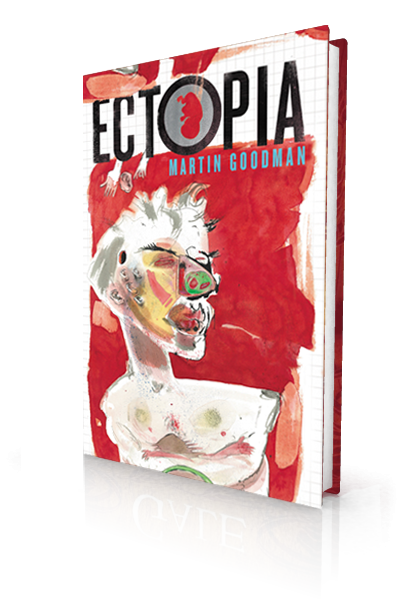
Ectopia

September 24, 2014

EctopiaA modern teenage dystopia. The world has seen no girls born for sixteen years. Karen was the last girl and Steven her twin. Their Dad’s of the old school. He turns their garden into a fortress. His children may yet be the future of the world, if they can escape in time. Think HUNGER GAMES or a CATCHER IN THE RYE for the Doom Generation.

Of Martin Goodman’s earlier work:

‘Heralds a new dawn for British writing’ – Liverpool Daily Post

‘Goodman’s novel soars’ – The Times

Reviews

Ectopia is a terrific novel with excellent characterisation, world-building, narration and dialogue. A story of great depth, raising questions about who we are and how we define ourselves. Steven is a brilliant narrator with a thrilling tale to tell. –Barbara Melville – Interzone

Ectopia is a thought provoking read that isn’t afraid to take risks, which gives it a leg up in the crowded dystopian marketplace. It’s not going to usurp The Hunger Games as teenagers’ dystopia du jour … but give it a few years and some of them will want to cut their teeth on something meatier. —Litreactor

The plot is infused with elements of myth, of gender, of catastrophe, and with the construction of narrative itself… It stands within a tradition that seeks to examine the nature of the present by constructing a fantastical but palpable other world that reflects some of the aspects of our own lives back on us. –Christopher Burns – The Warwick Review

Buy on Amazon.

Richard Bean’s GREAT BRITAIN: a counter view of the National Theatre

July 6, 2014

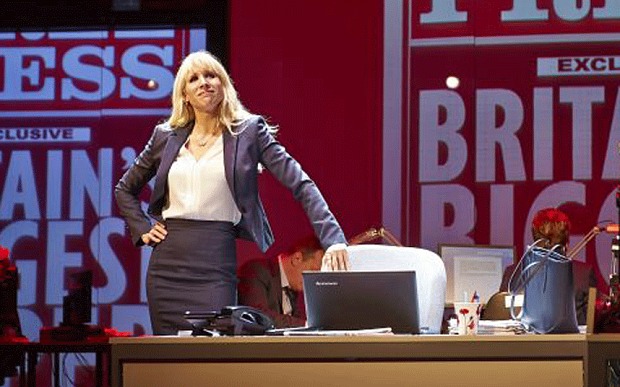
Paige_3053907b-1Did I laugh at Richard Bean’s Great Britain at the National Theatre. Yes … largely at the crudity of the tabloid editor, at the buffoonery of the Metropolitan Commissioner.

Was I braced by fierce insights into the national condition in the wake of the hacking trials? Well, no. guess I was foolish to expect such a thing … but the admirable secrecy of the production, rehearsed off-scene and only advertised once Andy Coulson was found guilty by the courts, made me expect something sharp and scabrous and likely savage from the production. it wasn’t so. In fact it was about as tame as an Alan Bennett production. The main players were rendered comic; they felt more amusing than shocking.

Critics seem to have loved it. It’s West-End transfer is already in place. It had skill and all … though the production seemed slack to me and needed tightening. In fact it all needed tightening, but then Bean isn’t Joe Orton. And the National Theatre is something of a state-sponsored institution I guess. it’s years since I’ve seen anything there that truly startled, turned me inside-out the way true theatre can. The Almeida takes more risks and has more of the counter-cultural energy that suits me … but then they’re probably not so invested in selling to the mainstream and tourist market.

Barbara Kingsolver’s FLIGHT BEHAVIOUR – a grand model for the environmental novel

May 3, 2014

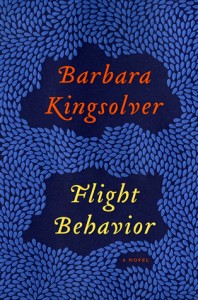
13438524-1I’m tracking through a lot of books as I tackle my own nonfiction project, on climate change and environmental law. Novel reading offers some light relief of an evening – Barbara Kingsolver’s Flight Behaviour nimbly blends both worlds.

It was the voice of Dellarobia, the main character, which drew me in – a young mother in the Appalachias, uneducated but bright (with a tart line in dialogue). It was the voice of a place and community I did not know … one suffering a deluge. Then clouds of millions of monarch butterflies amass themselves on the trees of the neighbouring hill. This is a fictional take on life, as the monarchs are seen as being moved up north from Mexico by climate change. A professor comes in hot pursuit. The dynamics of family and media and strangers are done extremely well. Sometimes, just sometimes, you sniff a bit of didacticism but then the lessons on climate change that are delivered are worth learning. The whole is very artfully structured, the people all so real. It’s a hearty recommendation.